Wednesday, June 2, 2010

DTN News: Australian Aerospace Announces Sale Of Dauphin Helicopter To Western Australian Police

Defense News: DTN News: Australian Aerospace Announces Sale Of Dauphin Helicopter To Western Australian Police
Source: DTN News / EADS Surfers Paradise, 31 May 2010
(NSI News Source Info) SURFERS PARADISE, Australia - June 3, 2010: Australian Aerospace today announced the sale of a multi-role Dauphin AS365 N3+ helicopter to the Western Australian Police Service.
The contract, worth more than $10 million, will provide a much-needed second helicopter for the state’s police – the helicopter is due to be delivered in September 2011. The AS365 N3+ is the latest version in Eurocopter’s Dauphin range. It is a four tonne, medium size, twin-engine helicopter which has a range of 650km and features state-of-the-art avionics.
The helicopter can perform missions in the most severe climatic conditions at high altitudes and high temperatures. Its large power margin allows rooftop landings and takeoffs in urban areas in complete safety.
Around 650 Dauphin aircraft are operated by police, homeland security and search and rescue agencies around the world, including three being flown by the Victorian Police Service. WA Police Commissioner Karl O'Callaghan says the Dauphin is a vital addition to the state’s police air wing. "Having a second helicopter will increase the capacity of WA Police to provide aerial support to frontline policing, search and rescue, counter terrorism operations and whole-of-government emergency management response" Mr O'Callaghan says.
Australian Aerospace Chief Executive Officer Dr Jens Goennemann believes the Dauphin is the ideal helicopter for the WA Police. “The Dauphin can operate in the extreme temperatures which are common in many parts of Western Australia,” he says.
“It is powered by two Turbomeca ARRIEL 2C gas turbines, which mean the helicopter can take off at maximum weight at more than 50° Celsius or at more than 40° Celsius with a full load in Category A conditions at sea level.” News of the sale comes as Australian Aerospace supports a wide range of Eurocopter helicopters at the HeliPacific 2010 conference on the Gold Coast.
The number and variety of Eurocopter helicopters being showcasing at HeliPacific underscores the depth and quality of the rotary-wing products which the company both manufactures and supports in the South Pacific military and civil aviation markets.
They include the latest word in basic/advanced aircrew trainers, the EC 135 - essentially the civil version of the military EC635 – which is being proposed as the new trainer for the Australian Defence Force (ADF).
“Australian Aerospace has a great deal of experience in providing customised training solutions to the Commonwealth,” says Chief Executive Goennemann, “so we are well positioned and ready to build on our strategic partnership with the Commonwealth through the AIR 9000 Phase 7 program”.
Australian Aerospace’s HeliPacific lineup comprises 10 helicopters, including:
EC 120B: This light five seat, single-engine aircraft is a multi-purpose helicopter designed to provide its users with mission flexibility. Modern and featuring advanced technology such as the fully-duplex Vehicle/Engine Multi-Function Display (VEMD) which enables the pilot to see at a glance the main parameters of the platform and engines, new generation fenestron, crashworthy seats and fuel system, the EC120 is a safe, quiet and comfortable aircraft. With very low operating costs and outstanding performance, the EC120 is the most efficient aircraft in its class.
AS350 B2/B3/SD2: These light, 5/6 passenger, enhanced/high performance helicopters are particularly suited to aerial work, police missions, or private user due to their versatility and low operating costs. The AS350 B2 can carry pilot, medical crew and patient as well as stowed equipment at 246 km/h (133 kts). The latest version features VEMD. The AS350 B3 goes even farther, faster and higher and is superior to all other helicopters in its class. Especially adapted to extreme conditions (high altitude/hot temperatures) its speed and comfort also make it an excellent business helicopter. The AS350 “SD2” helicopter incorporates piston-to-turbine convertion technology and is based on the original AS350B2 model.
EC135: The ideal aircraft for basic and advanced helicopter aircrew training, the EC135 is well suited to the AIR9000 Phase 7 program, being agile and responsive with multi-role capability. Offering high mission availability and low operating costs, the EC135 presents unrivalled safety on the ground and in flight. The high visibility contemporary glass cockpit provides commonality with the military ARH Tiger and MRH90.
AS365: Known as the Dauphin, this medium, twin-engine helicopter, seating up to 12 passengers, boasts excellent performance, making it particularly suited for more demanding missions such as police work, homeland security and search and rescue. A very versatile aircraft, it is also well-adapted to operations in hot climates and high altitudes, and is cost effective and efficient for all kinds of transportation.
Tiger ARH: The ARH Tiger is a two-seat, attack helicopter designed to perform a wide range of missions. Faster and more agile than its competitors, the ARH Tiger can detect and engage targets at longer ranges, and more easily coordinate and control combined arms teams. The Tiger incorporates cutting-edge technologies including: composite airframe to minimise weight and reduce radar cross-section; latest-generation engines and rotors; integrated suite of sensors and weapons; built-in low-cost maintenance design and latest generation target identification and acquisition sight. Inherently stealthy in radar cross-section, the Tiger employs infra-red suppression techniques to minimise infra-red detectability
About Australian Aerospace:
Australian Aerospace Limited is a wholly owned subsidiary of Eurocopter - a part of the European Aeronautic Defence & Space Group (EADS). Created in 2003 through the merger of Eurocopter International Pacific Limited and Australian Aerospace Pty Ltd, the company has evolved into a major defence supplier to the Australian Government. With more than 1000 staff in Australia and New Zealand and access to the financial strength and expertise of Eurocopter and the EADS Group, the company is well-positioned to manufacture and support civil and military helicopters in the Australia-Pacific region. In addition to its helicopter capabilities, Australian Aerospace has a long history of support to the Australian Defence Force (ADF). Currently it is assembling and delivering 22 Tiger ARH armed reconnaissance helicopters to the Australian Army and 46 MRH90 multi-role helicopters to the Army and Navy. It also provides support for the RAAF AP3C Orion reconnaissance aircraft and, until recently, the now retired Caribou transport fleet. Last year it commenced a through-life-support role for C-130J Hercules transports. The company is also involved in supporting the RAAF’s new Airbus A330-based Multi-Role Tanker-Transport (MRTT) aircraft.

DTN News: U.S. Department of Defense Contracts Dated June 2, 2010

Defense News: DTN News: U.S. Department of Defense Contracts Dated June 2, 2010
Source: U.S. DoD issued June 2, 2010
(NSI News Source Info) WASHINGTON - June 3, 2010: U.S. Department of Defense, Office of the Assistant Secretary of Defense (Public Affairs) Contracts issued June 2, 2010 are undermentioned;
CONTRACTS
AIR FORCE

~United Launch Services, LLC, Centennial, Colo., was awarded a $90,215,060 contract which will provide launch services for a medium-plus lift launch vehicle, National Reconnaissance Office Launch 38 mission. At this time, the entire amount has been obligated. LRSW/PK, El Segundo, Calif., is the contracting activity (FA8816-06-C-0004).
~Sabreliner Corp., St. Louis, Mo., was awarded a $90,000,000 contract which will provide engineering and research activities covering a variety of structures to include aircraft, ships, tanks, ground support equipment, bridges, and other varieties of aging structures. At this time, $200,000 has been obligated. 10 CONS, U.S. Air Force Academy, Colo., is the contracting activity (FA7000-10-D-0014).
~DLT Solutions, Herndon, Va., was awarded a $64,300,000 contract which will procure software maintenance and support for perpetual enterprise Oracle software licenses throughout the Air Force and the U.S. Transportation Command. At this time, $17,400,000 has been obligated. 754 ELSG/ESS, Maxwell Air Force Base-Gunter Annex, Ala., is the contacting activity (FA8771-10-F-8107).
~BAE Systems, Nashua, N.H., was awarded a $27,000,000 contract which will provide systems sustainment of the armament circuits preload test set; stores system tester; enhanced diagnostic aid; Viper memory loader/verifier support equipment; and all future derivative systems that support all blocks of the F-16 aircraft. At this time, no money has been obligated. 448 SCMG/PKAB, Hill Air Force Base, Utah, is the contracting activity (FA8251-10-D-0005).
~Harris Government Communications Systems Division, Palm Bay, Fla., was awarded a $23,682,238 contract which will provide hardware and software upgrades for the counter communications systems Block 10 pre-planned product improvement. At this time, $10,823,924 has been obligated. SSSW/PK, El Segundo, Calif., is the contracting activity (FA8819-08-C-0001).
~Booz Allen Hamilton, Inc., Herndon, Va., was awarded a $22,294,896 contract which will provide survivability and vulnerability analysis of the Air Force theater air control system. At this time, $1,537,698 has been obligated. 55 CONS/LGCD, Offutt Air Force Base, Neb., is the contracting activity (SP700-03-D-1380).
~Sierra Nevada Corp., Sparks, Nev., was awarded a $20,863,757 contract which will provide for interim contractor support for the modification to MC-130W aircraft to install a precision strike package in support of Project Dragon Spear, an urgent deployment acquisition to support U.S. Special Operations Command combat mission needs. At this time, $10,014,602 has been obligated. 580 ACSG/GFKAA, Robins Air Force Base, Ga., is the contracting activity (FA8509-10-C-0013).
~Northrop Grumman Space Technology, Clearfield, Utah, was awarded a $18,678,676 contract which will provide for increases to the modification value and obligation to provide solids depot support equipment test stands. At this time, the entire amount has been obligated. 526 ICBMSG/PKE, Hill Air Force Base, Utah, is the contracting activity (F42610-98-C-0001).
~McDonnell Douglas Corp., Long Beach, Calif., was awarded an $11,599,732 contract which will provide for increased funding for the Air Force fiscal 2008 material improvement projects as part of the C-17 Globemaster III sustainment partnership contract. At this time, the entire amount has been obligated. 516 AESG/PK, Wright-Patterson Air Force Base, Ohio, is the contracting activity (FA8614-04-C-2004).
~Battelle Memorial Institute, Columbus, Ohio, was awarded an $8,254,699 contract which will provide for technology assessments; situational awareness; systems integration; engineering test and evaluation; acquisition; logistics; training; information management; and program management of chemical, biological, radiological, and nuclear explosives defense systems. At this time, $1,537,458 has been obligated. 55 CONS/LGCD, Offutt Air Force Base, Neb., is the contracting activity (SP0700-00-D-3180).
~International Business Machines Corp., Yorktown Heights, N.Y., was awarded a $6,029,082 contract which will provide wafer-scale grapheme nanoelectronics research to expand on epitaxial growth techniques for exploitation of device and circuit designs on quartz substances. At this time, $3,139,510 has been obligated. AFRL/PKDB, Wright-Patterson Air Force Base, Ohio, is the contracting activity (FA8650-08-C-7838).
NAVY
~BAE Systems Survivability System, Inc., Fairfield, Ohio, is being awarded a $52,670,022 firm-fixed-priced requirements contract for procurement of 6,000 improved turret drive system retrofit kits and field service representative support. The kits are expected to be delivered by Dec. 26, 2010. The production will be performed in Fairfield, Ohio, and the assembling will be done in Afghanistan. This contract is a sole-source procurement. Other procurement Navy and Army funds will not expire at the end of the current fiscal year; other procurement Air Force funds will expire at the end of this current fiscal year. Marine Corps Systems Command, Quantico, Va., is the contracting activity (M67854-10-C-5063).
~General Dynamics Land Systems, Inc., Woodbridge, Va., is being awarded a $22,256,798 firm-fixed-price, cost-plus-fixed fee contract for the MK46 MOD 2 gun weapon systems (GWS) and associated hardware, spares and services in support of the landing platform dock and littoral combat ship class ships. The MK46 MOD 2 GWS contains a 30mm single barrel, open bolt, dual feed, electrically powered, chain-driven automatic cannon. The system uses a forward-looking infrared sensor, a low-light television camera, and eye-safe laser range finder with a closed-loop tracking system to optimize accuracy against small, high-speed surface targets. Work will be performed in Woodbridge, Va. (69 percent); Tallahassee, Fla. (12 percent); Lima, Ohio (12 percent); Westminster, Md. (4 percent); Scranton, Pa. (2 percent); and Sterling Heights, Mich. (1 percent). Work is expected to be completed by May 2013. Contract funds in the amount of $812,412 will expire at the end of the current fiscal year. This contract was not competitively procured. The Naval Sea Systems Command, Washington, D.C., is the contracting activity (N00024-10-C-5438).
~Booz Allen Hamilton, Inc., McLean, Va., is being awarded $9,476,595 for task order #0098 under previously awarded contract (M67854-02-A-9000) to provide business and analytical support to the Joint Program Executive Office for Chemical and Biological Defense’s Transformational Medical Technologies Initiative program. Objectives of this initiative include the development of acquisition documentation that support the development of medical systems and therapeutics, and the development of risk analyses that support current and planned programs of record that lead to concise business case analyses that identify cost and performance projections, schedule impacts, and sustainment/lifecycle considerations. Work will be performed at the Defense Threat Reduction Agency, Fort Belvoir, Va., and is expected to be completed in June 2011. Contract funds will not expire at the end of the current fiscal year. The Marine Corps System Command, Quantico, Va., is the contracting activity.
~L-3 Communications, Inc., Mount Laurel, N.J., is being awarded $7,784,090 for task order #0105 under previously awarded contract (M67854-02-A-9010) to provide programmatic acquisition, logistics, and administrative support to the program manager, Training Systems (PM TRASYS), located at the Central Florida Research Park, Orlando, Fla., in response to the internal reorganization of PM TRASYS and expanding training systems requirements for individual and collective training systems, and program and administration support. As part of PM TRASYS’s increasing role supporting Marine Corps Systems Command’s and the operational forces’ training needs, PM TRASYS requires additional technical support services to plan, field and sustain training systems Marine Corps-wide. This effort will help to ensure planned and unplanned funding allocations are effectively and efficiently utilized through a programmatic approach with improved investment strategies to obtain the highest quality training available. Administrative, logistics and acquisition initiatives are in response to the increasing support requirements centered on simulated and virtual training environments’ infusing of new technologies with established procedures. PM TRASYS support includes providing added program, logistics and administrative support for the determination of training methodologies, implementation and technical documentation for acquisition of training and training systems. Work will be performed in Marine Corps Command organizations in Orlando, Fla., and is expected to be completed in June 2011. Contract funds in the amount of $6,483,751 will expire at the end of the current fiscal year. The Marine Corps System Command, Quantico, Va., is the contracting activity.
~AAI Corp., Hunt Valley, Md., is being awarded a $6,045,979 firm-fixed-price contract for the procurement of universal test sets used in supporting operational-level testing of Joint Counter Radio-Controlled Electronic Warfare systems currently in use in Iraq and Afghanistan. Work will be performed in Charleston, S.C., and is expected to be completed by December 2010. Contract funds in the amount of $6,045,979 will expire at the end of the current fiscal year. This contract was not competitively procured. The Naval Surface Warfare Center, Indian Head Division, Indian Head, Md., is the contracting activity (N00174-10-C-0026).
DEFENSE LOGISTICS AGENCY
~Carter Enterprises, LLC*, Brooklyn, N.Y., is being awarded a maximum $6,318,000 firm-fixed-price, total set-aside contract for universal camouflage pattern, mechanics coveralls. Other location of performance is Brooklyn, N.Y. Using services are Army, Navy and Air Force. The original proposal was Web-solicited with eight responses. The date of performance completion is Nov. 1, 2011. The Defense Supply Center Philadelphia, Philadelphia, Pa., is the contracting activity (SPM1C1-09-D-1079).
*Small business

Northrop Grumman's Viper Strike Being Added to KC-130J Arsenal

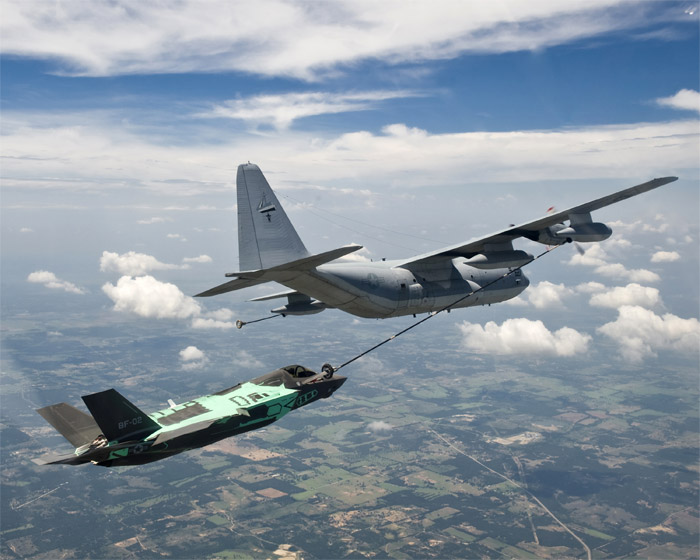
Defense News: HUNTSVILLE, Ala., June 2, 2010 (GLOBE NEWSWIRE) -- The U.S. Marine Corps Harvest Hawk aircraft will soon be equipped with Northrop Grumman Corporation (NYSE:NOC - News) -built Viper Strike stand-off precision guided munition as part of an effort under way to bring greater utility to the Marines' KC-130J refueling and cargo aircraft.

Under the terms of the contract, Northrop Grumman will deliver 65 Viper Strike munitions beginning this year to the Joint Attack Munition Systems Project Office within the Program Executive Office Missiles and Space at Redstone Arsenal for eventual integration onto the KC-130J platform.

Viper Strike is a gliding munition capable of precision attack from extended stand-off ranges using GPS-aided navigation and a semi-active laser seeker. Its small size, precision and high agility provide a very low collateral damage weapon that can be used in the difficult operational environments where U.S. troops may be deployed.

"In today's irregular warfare environment, Viper Strike provides the right characteristics needed to support our warfighters in the current fight - high precision and agility to hit targets in complex terrain and with very low collateral damage," said Steve Considine, programs director, Aviation and Weapons for Northrop Grumman's Land and Self-Protection Systems Division. "The KC-103J represents the latest military airborne asset to be equipped with Viper Strike's formidable capabilities."

Viper Strike munitions are produced at the company's Huntsville, Ala., facility.

Northrop Grumman Corporation is a leading global security company whose 120,000 employees provide innovative systems, products, and solutions in aerospace, electronics, information systems, shipbuilding and technical services to government and commercial customers worldwide.

DTN News: Pentagon Defends 6 Costly US Weapons Programs

Defense News: DTN News: Pentagon Defends 6 Costly US Weapons Programs
* Six programs certified vital to national security
* Officials to brief on process later Tuesday
Source: DTN News / By Andrea Shalal-Esa Reuters
(NSI News Source Info) WASHINGTON, - June 2, 2010: The Pentagon told Congress on Tuesday the Lockheed Martin Corp (LMT.N) F-35 fighter program and five other big weapons programs were vital to national security and should continue despite big cost overruns that triggered live-or-die reviews.
The U.S. Defense Department told lawmakers that all six programs met five conditions required to keep them going under the Nunn-McCurdy law which requires detailed reviews once a program's unit costs rise 50 percent above initial estimates.The cost of the F-35 program, for instance, is now expected to reach $382 billion over the life of the program. The expected cost of each aircraft rose from $50 million in fiscal year 2002 dollars to $92.4 million. But senior defense officials said they expected to undercut those estimates.
One senior defense official said the Pentagon was already doing detailed reviews of major weapons programs, given efforts to rein in cost overruns on many major weapons programs.
The Pentagon sent the certifications to Congress and then released details to reporters, but senior officials briefed on background and asked not to be named.
The official questioned how much value the time-consuming and costly Nunn-McCurdy reviews truly added to the Pentagon's oversight, noting that some cost increases reflected quantity changes and not management problems.
Officials were assessing the hours involved in the reviews, and trying to devise a more efficient process so senior acquisition officials could spend more time actually managing programs, the official said.
Part of the problem is that Nunn-McCurdy cost breaches actually occur long after program managers identified problems, said the official, who declined to speak on the record. "It's not the best mechanism for us."
The Pentagon in April said the F-35 and five other programs had exceeded certain cost thresholds, prompting reviews that could, but were not expected to, lead to termination.
"We are certifying these six programs," Pentagon spokesman Bryan Whitman told reporters on Wednesday after the department completed the reviews.
To allow continued funding, the Pentagon must certify that each program has no viable alternative; that new cost estimates are reasonable; that the program is vital to national security; that it rates a higher priority than other programs; and that it has an adequate management structure.
Defense officials told lawmakers in April that a restructuring of the F-35, or Joint Strike Fighter, would result in a sharp increase in unit costs, driving the overall program of the program to $328 billion. But new estimates indicate the cost will be even higher at $382 billion.
Other programs certified for continued work were:
-- the DDG-1000 destroyer built by General Dynamics Corp (GD.N), where the unit cost jumped by 86.5 percent due to the Navy's decision to buy just three ships instead of the 10 planned. To cut costs, Pentagon acquisition chief Ashton Carter ordered removal of a radar from the design, and a one-year delay in the initial use of the program to fiscal 2016.
-- Boeing Co's (BA.N) Apache Block III program to upgrade the AH-64 helicopter, which saw its unit costs increase by 25.5 percent due to the addition of 56 new aircraft to an existing program to upgrade 634 existing helicopters.
-- a remote mine-hunting system for use on a new class of coastal warships, which saw its unit cost increase by 79.5 percent after the Navy decided to buy 54 fewer systems.
-- Boeing's Wideband Global Satellite (WGS) program, whose unit cost rose by 27.2 percent due to a production break of three years and a decision to buy two more satellites.
-- a U.S. Army common missile warning program run by BAE Systems Plc (BAES.L), where unit costs nearly tripled after the Pentagon cut the quantity from 2,618 missiles to 208, spreading development costs over a much smaller overall number.
The Pentagon said the missile warning program was technologically immature and faced unrealistic performance expectations, but it needed to continue since the system was urgently needed in Afghanistan on CH-47 helicopters.
(Additional reporting by David Alexander; Editing by Tim Dobbyn and David Gregorio)

Tuesday, June 1, 2010

DTN News: Glitch Shows How Much US Military Relies On GPS

Defense News: DTN News: Glitch Shows How Much US Military Relies On GPS
Source: DTN News / By DAN ELLIOTT (AP)
(NSI News Source Info) DENVER, U.S. - June 2, 2010: A problem that rendered as many as 10,000 U.S. military GPS receivers useless for days is a warning to safeguard a system that enemies would love to disrupt, a defense expert says.
The Air Force has not said how many weapons, planes or other systems were affected or whether any were in use in Iraq or Afghanistan. But the problem, blamed on incompatible software, highlights the military's reliance on the Global Positioning System and the need to protect technology that has become essential for protecting troops, tracking vehicles and targeting weapons.
"Everything that moves uses it," said John Pike, director of Globalsecurity.org, which tracks military and homeland security news. "It is so central to the American style of war that you just couldn't leave home without it."
The problem occurred when new software was installed in ground control systems for GPS satellites on Jan. 11, the Air Force said.
Officials said between 8,000 at 10,000 receivers could have been affected, out of more than 800,000 in use across the military.
In a series of e-mails to The Associated Press, the Air Force initially blamed a contractor for defective software in the affected receivers but later said it was a compatibility issue rather than a defect. The Air Force didn't immediately respond to a request for clarification.
The Air Force said it hadn't tested the affected receivers before installing the new software in the ground control system.
One program still in development was interrupted but no weapon systems already in use were grounded as a result of the problem, the Air Force said. The Air Force said some applications with the balky receivers suffered no problems from the temporary GPS loss.
An Air Force document said the Navy's X-47B, a jet-powered, carrier-based drone under development, was interrupted by the glitch. Air Force officials would not comment beyond that on what systems were affected.
Navy spokeswoman Jamie Cosgrove confirmed the X-47B's receivers were affected but said it caused no program delays.
At least 100 U.S. defense systems rely on GPS, including aircraft, ships, armored vehicles, bombs and artillery shells.
Because GPS makes weapons more accurate, the military needs fewer warheads and fewer personnel to take out targets. But a leaner, GPS-dependent military becomes dangerously vulnerable if the technology is knocked out.
James Lewis, a senior fellow at the Center for Strategic and International Studies, said the glitch was a warning "in the context where people are every day trying to figure out how to disrupt GPS."
The Air Force said it took less than two weeks for the military to identify the cause and begin devising and installing a temporary fix. It did not say how long it took to install the temporary fix everywhere it was needed, but said a permanent fix is being distributed.
All the affected receivers were manufactured by a division of Trimble Navigation Limited of Sunnyvale, Calif., according to the Air Force. The military said it ran tests on some types of receivers before it upgraded ground control systems with the new software in January, but the tests didn't include the receivers that had problems.
The Air Force said it traced the problem to the Trimble receivers' software. Trimble said it had no problems when it tested the receivers, using Air Force specifications, before the ground-control system software was updated.
Civilian receivers use different signals and had no problems.
Defense industry consultant James Hasik said it's not shocking some receivers weren't tested. GPS started as a military system in the 1970s but has exploded into a huge commercial market, and that's where most innovation takes place.
"It's hard to track everything," said Hasik, co-author of "The Precision Revolution: GPS and the Future of Aerial Warfare."
The Air Force said it's acquiring more test receivers for a broader sample of military and civilian models and developing longer and more thorough tests for military receivers to avoid a repeat of the January problem.
The Air Force said the software upgrade was to accommodate a new generation of GPS satellites, called Block IIF. The first of the 12 new satellites was launched from a Delta 4 rocket Thursday after several delays.
In addition to various GPS guided weapons systems, the Army often issues GPS units to squads of soldiers on patrol in Iraq and Afghanistan. In some cases a team of two or three soldiers is issued a receiver so they can track their location using signals from a constellation of 24 satellites.
Space and Missile Systems Center spokesman Joe Davidson said in an e-mail to The Associated Press that the system is safe from hackers or enemy attack.
"We are extremely confident in the safety and security of the GPS system from enemy attack," he said, noting that control rooms are on secure military bases and communications are heavily encrypted.
"Since GPS' inception, there has never been a breach of GPS," Davidson said. He added that Air Force is developing a new generation of encrypted military receivers for stronger protection.
The military also has tried to limit the potential for human error by making the GPS control system highly automated, Davidson said.
GPS satellites orbit about 12,000 miles above Earth, making them hard to reach with space weapons, said Hasik, the defense industry consultant. And if the GPS master control station at Schriever Air Force Base, Colo., were knocked out, a backup station at Vandenberg Air Force Base, Calif., could step in.
Iraq tried jamming GPS signals during the 2003 U.S. invasion, but the U.S. took out the jammer with a GPS-guided bomb, Hasik said.
The technology needed to jam GPS signals is beyond the reach of groups like the Taliban and most Third World nations, Hasik said. Jamming is difficult over anything but a small area.
"The harder you try to mess with it, the more energy you need. And the more energy you use, the easier it is for me to find your jammer," Hasik said.
More worrisome, Hasik said, is the potential for an accident within U.S. ranks that can produce anything from an errant bomb to sending troops or weaponry on the wrong course.
In 2001, a GPS-guided bomb dropped by a Navy F-18 missed its target by a mile and landed in a residential neighborhood of Kabul, possibly killing four people. The military said wrong coordinates had been entered into the targeting system.
*American Achilles Heel: GPS ThreatsWatch.Org

Monday, May 31, 2010

DTN News: Deaths As Israeli Forces Storm Gaza Aid Ship

Defense News: DTN News: Deaths As Israeli Forces Storm Gaza Aid Ship
Source: DTN News By Roger Smith complied from BBC News, AP + Press TV
(NSI News Source Info) TORONTO, Canada - May 31, 2010: More than 10 people have been killed after Israeli commandos stormed a convoy of ships carrying aid to the Gaza Strip, the Israeli army says.
Armed forces boarded the largest vessel overnight, clashing with some of the 500 people on board.
It happened about 40 miles (64 km) out to sea, in international waters.
Israel says its soldiers were shot at and attacked with bars and knives; the activists say Israeli troops came on board shooting.
The European Union has called for an inquiry to establish what happened. 'Guns and knives'
The six-ship flotilla, carrying 10,000 tonnes of aid, left the coast of Cyprus on Sunday and had been due to arrive in Gaza on Monday.
Israel says its soldiers boarded the lead ship in the early hours but were attacked with knives, bars and gunfire.
We were not going to pose any violent resistanceAudrey Bomse Free Gaza Movement
"Unfortunately this group were dead-set on confrontation," Israeli government spokesman Mark Regev told the BBC.
"Live fire was used against our forces. They initiated the violence, that's 100% clear," he said.
Organisers of the flotilla said at least 30 people were wounded in the incident. Israel says 10 of its soldiers were injured, one seriously.
A leader of Israel's Islamic Movement, Raed Salah, who was on board, was among those hurt.
Audrey Bomse, a spokesperson for the Free Gaza Movement, which is behind the convoy, told the BBC Israel's actions were disproportionate.
"We were not going to pose any violent resistance. The only resistance that there might be would be passive resistance such as physically blocking the steering room, or blocking the engine room downstairs, so that they couldn't get taken over. But that was just symbolic resistance."
She said there was "absolutely no evidence of live fire".
Israel says it will tow the boats to the port of Ashdod and deport the passengers from there. It says it will deliver the ships' aid to Gaza. Condemnation
Turkish TV pictures taken on board the Turkish ship leading the flotilla appeared to show Israeli soldiers fighting to control passengers.

The footage showed a number of people, apparently injured, lying on the ground. A woman was seen holding a blood-stained stretcher.
Al-Jazeera TV reported from the same ship that Israeli navy forces had opened fire and boarded the vessel, wounding the captain.

The Al-Jazeera broadcast ended with a voice shouting in Hebrew, saying: "Everybody shut up!"
Israel's deputy Foreign Minister Danny Ayalon said his country "regrets any loss of life and did everything to avoid this outcome".
He accused the convoy of a "premeditated and outrageous provocation", describing the flotilla as an "armada of hate".
Palestinian Authority President Mahmoud Abbas condemned Israel's actions, saying it had committed a massacre.
Most of the people on board the boats were Turkish.
Turkey said it "strongly condemn[ed] these inhumane practices of Israel", AFP news agency reported.
In Turkey, dozens of protesters tried to storm the Israeli consulate in the Istanbul, while Israeli ambassadors have been summoned to the Turkish, Greek and Spanish foreign ministries to explain what happened. Blockade
Israel had repeatedly said it would stop the boats, calling the campaign a "provocation intended to delegitimise Israel".
Israel and Egypt tightened a blockade of Gaza after the Islamist movement Hamas took power there in 2007.
Israel says it allows about 15,000 tonnes of humanitarian aid into Gaza every week.
But the United Nations says this is less than a quarter of what is needed.
The incident comes a day before Israeli Prime Minister Benjamin Netanyahu is due to meet US President Barack Obama in Washington after one of the most strained periods in US-Israeli relations in year.
*This article is being posted from Toronto, Canada By DTN News ~ Defense-Technology News, contact: dtnnews@ymail.com
Related News:

Sunday, May 30, 2010

DTN News: Australia's Role In Afghanistan

Defense News: DTN News: Australia's Role In Afghanistan
Source: DTN News / Military World
(NSI News Source Info) TORONTO, Canada - May 30, 2010: Australia has approximately 1,090 defence personnel working in Afghanistan, as part of Operation SLIPPER.
In April, 2009, the Australian Government announced an additional 450 troops would be sent to Afghanistan. When they arrive, Australia's contribution will be approximately 1,550.
Primarily, Operation SLIPPER contributes to the International Security Assistance Force (ISAF).
There are also about 800 personnel deployed in other parts of the Middle East, providing support for Operation SLIPPER.
**(Uruzgan Province) Mentoring and Reconstruction Task Force 1 - About 440 Australian personnel. MRTF1 is engaged in construction works in Uruzgan Province and is also helping to train the Afghan National Army. It is mainly comprised of engineers and mechanised infantry and cavalry.
**(Uruzgan Province) Special Operations Task Group (SOTG) - Up to 330 Australian personnel. The SOTG provides security and protection to members of Mentoring and Reconstruction Force 1. It consists of commandos, members of the Special Air Service Regiment (SAS) and support personnel.
**(Kandahar) Air Force Control and Reporting Centre (CRC) - Up to 75 Australian personnel. The CRC is based at Kandahar Airfield and controls southern Afghan operational airspace.
**(Kandahar) Force Level Logistic Asset - About 60 Australian personnel. This unit provides logistical support to ADF operations throughout Afghanistan, from a national logistics asset in Kandahar.
**(Across Afghanistan) Unmanned Aerial Vehicle Detachment. 30 Australian personnel. This unit operates the SCANEAGLE UAV, a remote-controlled aircraft used for reconnaissance and intelligence gathering.
**(Kandahar) Rotary Wing Group (RWG)- About 65 Australian personnel. The RWG operates two CH47D medium lift helicopters for Kandahar Airfield. The helicopters provide combat support, quick response force and medical evacuation missions.
*This article is being posted from Toronto, Canada By DTN News ~ Defense-Technology News, contact: dtnnews@ymail.com

DTN News: U.S. Releases Uruzgan Investigation Findings ~ Afghanistan

Defense News: DTN News: U.S. Releases Uruzgan Investigation Findings ~ Afghanistan
Source: DTN News / Military World
(NSI News Source Info) TORONTO, Canada - May 30, 2010: US Forces-Afghanistan released its findings today from the investigation into the Feb. 21 civilian casualty incident that killed up to 23 Afghans and injured 12 others in Uruzgan Province.
The extensive investigation report submitted to Gen. Stanley McChrystal, Commander NATO ISAF/U.S. Forces-Afghanistan cites several shortcomings in training, communication and decision-making, and offered numerous recommendations.
Gen. McChrystal has directed that certain actions be pursued immediately. "Our most important mission here is to protect the Afghan people; inadvertently killing or injuring civilians is heartbreaking and undermines their trust and confidence in our mission. We will do all we can to regain that trust," he said.
The investigation, led by U.S. Army Maj. Gen. Timothy McHale, Deputy Commander for Support, U.S. Forces Afghanistan, reviewed the actions of a U.S. Special Forces Operational Detachment Alpha (ODA) unit and its higher headquarters, coalition aircraft, and support provided by U.S. Air Force Predator Unmanned Aerial Vehicle (UAV) personnel. The report concluded that three vehicles carrying more than 30 civilians were mistaken for an insurgent convoy and engaged by coalition aircraft. The ODA ground force commander believed the vehicles contained a group of insurgents attempting to execute a flanking maneuver to reinforce insurgents in his area.
Gen. McChrystal, who offered a personal apology to the Afghan people and met with President Hamid Karzai immediately following the Feb. 21 incident, briefed President Karzai on the findings of the investigation earlier this week.
"This was a deeply regrettable incident and I share the sadness felt by the people of Afghanistan over this loss of innocent life," said President Karzai. "General McChrystal pledged to me that the most exhaustive investigation would be conducted to determine what happened and why, and I believe this has been done. I am also confident that appropriate actions are being taken with regard to those involved in the incident, and most importantly, to ensure measures are taken to prevent such accidents from happening again."
Investigation recommendations approved by Gen. McChrystal entail actions to be taken in pre-deployment training, as well as the conduct of operations in Afghanistan.
* U.S. Joint Forces Command (JFCOM), which is responsible for pre-deployment training at individuals' and units' home stations, will review and implement several changes in training. These include a rigorous series of challenging Counterinsurgency (COIN) training scenarios, use of case studies and vignettes to better educate and train for leading COIN operations, and standardization of terminology for use in the highly-stressed operational environment, which will be reinforced in pre-deployment training.
* ISAF Joint Command (IJC) and the U.S. Forces-Afghanistan J7 Training Directorate will develop a Mobile Training Team to evaluate and train unit command posts in the field on COIN operations, and develop an ongoing program to better educate and train for leading COIN operations. This will include intensive training on the process of identifying and engaging combatants in accordance with Rules of Engagement and Tactical Directives that govern operational conduct. * All units identified in the report are also directed to incorporate or retrain on the appropriate procedures for Civilian Casualty reporting.
"As partners with the Afghan people in our mission, we must always be honest with ourselves about what we do well and what we can do better," said Gen. McChrystal. "When we make a mistake, we must be forthright and we must do everything in our power to correct that mistake. I know our actions following this thorough investigation will help us to prevent mishaps that result in harm to the people we are sworn to protect."
The recommendations of the investigation report are responsive to findings of deficiencies that contributed to the accident. These included:
Although the ground force commander displayed tactical patience in letting the situation develop for several hours before the engagement, the UAV crew provided inaccurate reporting and in-country command posts failed to properly analyze the situation.
The ground force commander lacked a clear understanding of who was in the vehicles, the location, direction of travel and likely course of action of those vehicles.
Poorly functioning higher headquarters command posts failed to provide the ground force commander with the evidence and analysis that the vehicles were not a hostile threat.
Information that the convoy was anything other than an attacking force was ignored or downplayed by UAV personnel.
Following a review of Maj. Gen. McHale's investigation, Gen. McChrystal issued General Officer Memoranda of Reprimand (GOMOR) to four officers, including senior leaders at the Battalion and Brigade level. The GOMORs, while administrative in nature, may be placed in the official record of each of these officers once they have had a chance to respond. Gen. McChrystal also issued Memoranda of Admonishment to two junior officers involved, which will remain in their local file.
Also included among recommendations adopted by Gen. McChrystal is a request to Headquarters, U.S. Air Force to develop command level guidance on tactics, techniques and procedures (TTPs) regarding employment of Remote Pilot Vehicles. He also requested an Air Force investigation of the assessments made and actions taken by the specific UAV crew involved.
*This article is being posted from Toronto, Canada By DTN News ~ Defense-Technology News, contact: dtnnews@ymail.com

DTN News: Our Soldiers Have Shed Enough Blood: It Is Time To Come Home From Helmand

Defense News: DTN News: Our Soldiers Have Shed Enough Blood: It Is Time To Come Home From Helmand
*The strategy of sending patrols out to be shot at by the Taliban is needlessly costing the lives of British troops
Source: Denis MacShane MP The Observer, Sunday 30 May 2010
(NSI News Source Info) LONDON, U.K. - May 30, 2010: It is time to stop the blood sacrifice of our young soldiers in Afghanistan. In June 2003, Tony Blair initiated the grim ritual of reading out the names of the fallen at the start of each prime minister's questions. David Cameron's first words as PM at the Dispatch Box after the Queen's Speech were an incantation to the new victims of a war that is as unwinnable as it is unwanted by the people of both Britain and Afghanistan.
In 1985, Mikhail Gorbachev described Afghanistan as a "bleeding wound". Last week, US general Stanley McChrystal called it a "bleeding ulcer". Britain has no general, no "master of strategy" as the inscription on Field Marshal Lord Alanbrooke's statue outside the Ministry of Defence puts it, with the 21st-century vision to stop the blood-letting as officers and men are sent as IED fodder. War is too important to be left to generals. Unfortunately ministers past and present have flinched from thinking strategically. If the object is to stop Afghanistan from again becoming a base for al-Qaida to launch attacks, there are alternatives to sending out men on foot patrols to be blown up by hidden bombs or shot by snipers who fade back into the hills.
The new defence secretary is now known as "13th-Century Fox" after his colonial, quasi-racist rant about Afghanistan as a 13th-century nation. President Karzai is an obsessive reader of British and American papers. Liam Fox's patronising contempt has done serious damage to Britain's influence in Kabul. Instead of apologising gracefully, Fox blustered and tried to explain away his gaffe. But he did hint at a truth when he suggested that Britain should look to reducing its military profile in Afghanistan. Unfortunately this outbreak of wisdom was slapped down by the foreign secretary, William Hague.
In Canada, the Conservative government has confirmed its troops will leave next year. There is new thinking in the Netherlands, one of Britain's key Nato allies, where the government collapsed over Afghanistan. Nato has new duties to guard its Baltic flanks and ensure that the melting Arctic becomes a sea of trade and peace. It no longer needs to define its existence by occupying Afghanistan.
There is fresh thinking among Tory MPs. In the Commons last week, Patrick Mercer MP, a former commanding officer of an infantry regiment, made the point that Britain's terrorists were bred and trained in Yorkshire, not Afghanistan. Another Tory MP, the former shadow defence minister Julian Lewis, said Britain should create sovereign strategic bases in Afghanistan to support the government and ensure al-Qaida does not return, but stop the pointless patrols that are target practice for the Taliban.
Every six months, a new commander is sent from London to head the fighting soldiers in Afghanistan. These brigadiers rotate, so that, instead of fighting one six-year war, we have fought 12 six-month wars, so that future red tabs can punch their tickets. The can-do, will-do power-point style of the British army impresses politicians, and every visiting minister and journalist is in awe of these tough, sun-burnt, dedicated professionals. It is hard to say that they and their generals are wrong, but the time has come to put parliament and elected ministers in charge. The pro-war tabloids say they are backing our boys. They are not: they are backing the generals. Officers and men ready to criticise the campaign have no voice.
Diplomats and development aid should be redirected to Pakistan and India, as well as to China and Iran, to remove the widespread feeling among Muslim communities that this is Kipling's west again seeking to control the lives of people whose customs and needs they do not understand. The burning issue of Kashmir, where 70,000 Muslims have been killed since the Indian army took over full control of the disputed region 20 years ago, needs to be put on the international agenda. The White House is clearly looking for an exit strategy. Britain also needs to begin PMQs without a roll-call of the dead and maimed. We have done our duty. It is time to come home.
*Denis MacShane is Labour MP for Rotherham and a former FCO minister
Disclaimer statement
Whilst every effort has been made to ensure the accuracy of the information supplied herein, DTN News ~ Defense-Technology News cannot be held responsible for any errors or omissions. Unless otherwise indicated, opinions expressed herein are those of the author of the page and do not necessarily represent the corporate views of DTN News ~ Defense-Technology News.

DTN News: Afghanistan TODAY May 30, 2010 ~ Prospect Of Peace Talks Heightens Rifts Among Taliban Ranks

Defense News: DTN News: Afghanistan TODAY May 30, 2010 ~ Prospect Of Peace Talks Heightens Rifts Among Taliban Ranks
Source: By Sherin Jabarkhil For CentralAsiaOnline.com 2010-05-19
(NSI News Source Info) KABUL, Afghanistan - May 30, 2010: Some officials in the Afghan capital are saying that offers of jobs, security, financial incentives and exile have heightened existing tensions in the Afghan Taliban’s ranks.
The peace and reconciliation plan will offer those incentives to militants willing to denounce violence and accept the Afghan constitution, said an official who has been part of the National Advisory Peace Jirga, scheduled for the end of this month.
"Many insurgent commanders and foot soldiers are tired of insurgency and are waiting to join the government. The Hamid Karzai government already has gained the consent of the international forces in this regard", the official told Central Asia Online.
Tempting offers from the government are magnifying tensions among upper- and lower-level Taliban leaders, the official added.
Even the supreme Taliban leader, Mullah Omar, favours a peace deal, said a senior member of the Afghan National Council. Speaking on condition of anonymity, the council member told Central Asia Online that Mullah Omar was facing problems in his leadership and a lack of resources, making him willing to strike a deal.
Mullah Omar has been quoted several times as saying he is willing to talk with the Afghan government only after international forces leave the country. Other Taliban members reportedly are willing to negotiate before coalition forces leave, which may be one source of tension among Taliban factions.
Mullah Omar and his erstwhile military right-hand man, Mullah Baradar, might have differed on reconciliation. The Pakistani arrest of Mullah Baradar in February made the point moot, but some counterinsurgency analysts theorised that Mullah Omar wanted a role for Pakistan in any reconciliation with Afghanistan. On the other hand, analysts said, Mullah Baradar had reached out to the UN and the Afghan government, bypassing Pakistan.
After police arrested Mullah Baradar, Mullah Akhtar Mansoor, who served as civil aviation minister during Taliban regime, expected to be named Mullah Omar’s deputy. But a formal decree from the Quetta Shura promoted Mullah Qayum Zakir to that post and that of Taliban defence minister.
The promotion of Zakir did not sit well with Mullah Mansoor, according to sources close to the Taliban. Pakistani intelligence reportedly arrested Mansoor but released him after he accepted Zakir’s authority.
However, tensions in the south still exist between the two mullahs, observers on the scene have said. They often compete for power by increasing forces from their own tribes, a tribal elder in Helmand said.
Many counterinsurgency analysts say those two commanders are among the diehard Taliban leaders unlikely to give up, since they have ties to al-Qaeda. They also are closely allied to the Haqqani and Hafiz Gul Bahadur networks in North Waziristan, but are despised by some other groups within the Taliban and by some of the non-Taliban insurgent groups, such as Gulbuddin Hekmatyar’s Hizb-e-Islami.
The tension has not yet sparked intra-Taliban fighting, informed sources told Central Asia Online. But the sources reported combat between Taliban and Hizb-e-Islami fighters in many places, the most important of which was a battle in northern Baghlan province in March that took about 100 lives from both sides.
Battles within the Taliban for control of a zone or province are a serious matter, counterinsurgency experts say, because control of a province enables the victor to profit from the drug trade, kidnappings and donations from terrorist networks in foreign countries.
Whatever the reason for the rifts between militants, they serve the reconciliation plan, the anonymous official in Kabul said, because they spur more insurgents to contact the government about laying down their arms.
Disclaimer statement
Whilst every effort has been made to ensure the accuracy of the information supplied herein, DTN News ~ Defense-Technology News cannot be held responsible for any errors or omissions. Unless otherwise indicated, opinions expressed herein are those of the author of the page and do not necessarily represent the corporate views of DTN News ~ Defense-Technology News.

DTN News: Russia To Test New Model Of Kalashnikov Assault Rifle In 2011

Defense News: DTN News: Russia To Test New Model Of Kalashnikov Assault Rifle In 2011
Source: DTN News / Ria Novosti
(NSI News Source Info) MOSCOW, Russia - May 30, 2010: State tests of the new model of Kalashnikov automatic rifles will be held in Russia next year, Izhmash Director General Vladimir Grodetsky said on Tuesday.
The new model of the legendary assault rifle, the AK-200, is based on the AK-74M and differs in weight (3.8 kilograms/8.4 lbs vs. 3.3 kilograms/7.3 lbs) and the magazine capacity (30, 50, 60 rounds vs. 30).
The AK-74, a developed version of the Kalashnikov rifle's first model, the AK-47, was introduced in 1974 and used by the Soviet forces during the Afghanistan conflict.
The AK-47 was originally created by Mikhail Kalashnikov, who as a WWII soldier was inspired to design the weapon after being wounded in 1941. While his first attempts were unsuccessful, he was given a position in weapons development, and by 1947 he had perfected his masterpiece.
Since then, the AK-47 has become the most widespread and famous assault rifle. Used by some 50 armies around the world, as well as countless urban guerrilla movements, it is also featured on the flag of Mozambique.
Kalashnikov received Russia's highest honorary title on his 90th birthday last November. Accepting the award, Kalashnikov voiced regret that his creation, the world's most widely used rifle, has been often misused.
Russian President Dmitry Medvedev described the AK-47 at the ceremony as "an excellent model of Russian weaponry" and "a national brand that makes each citizen proud."