Sunday, July 10, 2011

DTN News - U.S. DEFENSE NEWS: Panetta Arrives In Baghdad For Talks With Leaders

Defense News: DTN News - U.S. DEFENSE NEWS: Panetta Arrives In Baghdad For Talks With Leaders
(NSI News Source Info) TORONTO, Canada / BAGHDAD, Iraq - July 10, 2011: Defense Secretary Leon E. Panetta arrived here today for meetings with senior Iraqi and American officials.

It is his first trip to the country since becoming defense secretary nine days ago, and he has a range of issues he will bring up, he said during a short news conference with reporters during his first stop in Afghanistan.

"There is concern with security there and what is being done to stop the Iranian weapons from coming into Iraq" he said. In June, the United States lost 15 troops, the highest number in two years.

The secretary will also raise governance questions, he said.

"We're now more than a year since the elections and we still don't have a minister of defense or a minister of the interior," Panetta said. While the security services are functioning, it is the U.S. opinion that the absence of leadership in those two ministries is not helpful in the current security environment, he said.

Panetta will also point out that the United States is withdrawing all forces from Iraq by the end of the year. If the Iraqis want some sort of American follow-on force, they have to make a formal request.

Panetta will be meeting President Jalal Talibani and Prime Minister Nouri al-Maliki. He will also meet with Kurdish President Massoud Barzani.

The topics will include reaffirming the U.S. commitment to withdraw all forces by the end of the year as part of the U.S.-Iraq Security Agreement signed in 2008. He will also reaffirm that the United States is serious about a long-term relationship with Iraq over a wide swath of issues, including economic, cultural, educational and security, said a senior defense official speaking on background.

On the possibility of keeping a residual U.S. force in Iraq, Panetta will convey to the Iraqis a similar message that former Defense Secretary Robert M. Gates and Navy Adm. Mike Mullen, the chairman of the Joint Chiefs of Staff, delivered when they visited.

"There's some urgency for them to make that request if they are going to make it," the senior defense official said. "It's simply the laws of physics associated with the drawdown, the time it will take to negotiate the agreement. We're starting to run up against the clock, and he will make that point."

Both sides understand the Iraqi security forces have gaps in capabilities. Most notably these are command and control, intelligence fusion, logistics and sustainment. "These could be helped by a small U.S. presence," the official said.

There is no specific number of U.S. forces that could remain in Iraq under discussion, the official said. The Iraqis must first ask for specific capabilities. "Once there are specific 'asks' then we can get down to brass tacks about numbers and missions," the official said.

The secretary will also stress how important it is for Iraqi security forces to not let up in going after all insurgent and illegal militia forces.

U.S.officials are concerned about increasing support from Iran to Iraqi insurgent groups. "The key right now is to do everything possible to ensure the Iraqis within their own country are doing what they can to stop the flow of weapons, and stop the Shiia from using them," Panetta said to Marines at Camp Dwyer in Afghanistan earlier today.

U.S.leaders expected some of the recent rise in violence in Iraq, said the senior defense official. Senior military leaders "always felt that as we came into the final period of the drawdown that militant groups across the Sunni and Shiia spectrum would try to bloody our noses on our way out to create the false narrative that they were driving us out of Iraq," he said.

"The drawdown is based on an agreement and presidential guidance, but the insurgents and Iranian groups are trying to create the impression that we are being driven out," the official said.

The Iranian government also may be trying to intimidate the Iraqi government as discussions for a continued U.S. presence after December 31 go on, the official said.


*Speaking Image - Creation of DTN News ~ Defense Technology News
*This article is being posted from Toronto, Canada By DTN News ~ Defense-Technology News

©

COPYRIGHT (C) DTN NEWS DEFENSE-TECHNOLOGY NEWS

DTN News - PAKISTAN NEWS: Chaos In Pakistan With Insurgency, Ethnic Violence And Govt Sanctioned Journalist's Murder

Defense News: DTN News - PAKISTAN NEWS: Chaos In Pakistan With Insurgency, Ethnic Violence And Govt Sanctioned Journalist's Murder
**US suspends some Pakistan military aid says Obama aide: The Obama administration will hold back about $800 million in aid to the Pakistani military because Washington is unhappy with Pakistan’s expulsion of US military trainers and its campaign against militants, the New York Times reported on Saturday. Relations between the two governments have been strained with the United States wanting Pakistan to intensify its counterterrorism efforts. The relationship also has been tense due to the surprise US raid that killed al Qaeda leader Osama bin Laden on May 2, US drone attacks that have killed civilians and a raft of other issues. The Times, citing three US senior officials, said the United States was suspending or canceling $800 million in aid and equipment —more than a third of the $2 billion it gives Pakistan for security assistance.
About $300 million in US funding is to reimburse Pakistan for deploying more than 100,000 troops along the Afghan border to combat Taliban and other militant forces. Other funding covers training and military hardware, Times sources said.
(NSI News Source Info) TORONTO, Canada - July 10, 2011: During Bush administration, US were whispering to Pervez Musharraf to act on militants, as terrorism originating from Pakistan was becoming a global menace to society all around the world and the same time US closed their eyes on Taliban related activities bombing in Bali, Spain, U.K., Philippines, Mumbai and other countries.

Pervez Musharraf, Bush treated him like a spoilt brat: Pervez Musharraf was invited several times to the White House and Bush treated him like a spoilt brat and affirmed him a status of the closest coalition partner for war on terror against organizations designated as terrorist and regimes that were accused of having a connection to them or providing them with support or were perceived, or presented as posing a threat to the US and its allies in general. It was typically used with a particular focus on militant Islamists and al-Qaeda. Bush provided Pakistan with approx. $20 billion in military and economy assistant / aid. Pervez Musharraf played an even hand between Taliban and the US, on release of monetary / military aid by US or their top officials visit To Islamabad, Pervez Musharraf would arrest few insurgents to appease Americans, while other insurgents were arming and attacking ISAF forces across the border in Afghanistan and the coalition forces from NATO and ISAF were not allowed to pursue the attackers to their safe shelter in Pakistan, causing resurgence of the Taliban. Pervez Musharraf ruled Pakistan as Chief Executive from 1999–2001 and as President from 2001-08. In the face of likely impeachment, he resigned on 18 August 2008.

President Asif Ali Zardari: In April, 2009., President Asif Ali Zardari, under pressure from conservatives, signed a regulation imposing Islamic sharia law in the Swat valley to end Taliban violence. The Obama Team worked in the right direction with Pakistan and have to put their foot down and require for accountability as the current government of Pakistan under Zardari were following the path of their predecessor Pervez Musharraf. Last eight years under Pervez Musharraf administration, Taliban and al Qaeda gathered memento in strength. As of July 2009 the U. S. Air Force’s robotic drone fleet stands at 195 Predators and 28 Reapers, partial fleet would be deployed in Afghanistan to eliminate Taliban and al-Qaeda elements.

Pakistan's ISI Spy Agency Has 'Militant Links' Says Adm Mike Mullen: In early 2011, the US military's top officer, Adm Mike Mullen, has repeatedly accused Pakistan's spy agency of having links with militants targeting troops in Afghanistan. He said Pakistan's Inter-Services Intelligence (ISI) had a "long-standing relationship" with a militant group run by Afghan insurgent Jalaluddin Haqqani. "It's fairly well known that the ISI has a long-standing relationship with the Haqqani network," Adm Mullen told Pakistan's Dawn newspaper."Haqqani is supporting, funding, training fighters that are killing Americans and killing coalition partners. And I have a sacred obligation to do all I can to make sure that doesn't happen."

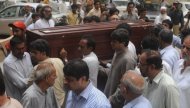
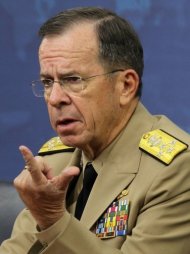
Govt Sanctioned Journalist's Murder Says Adm Mike Mullen: Last week, Admiral Mike Mullen, chairman of the US Joint Chiefs of Staff, went public with allegations that the Pakistani government approved the murder of Syed Saleem Shahzad, whose battered body was found in a canal in May.“It’s been reported recently and I haven’t seen anything that would disabuse that report,” America’s most senior military officer told reporters from the Pentagon Press Association.Although he said he did not have evidence linking the killing to a specific government agency, he added: “It was sanctioned by the government, yeah.” Analysts said the statement was unprecedented and would drive the two countries further apart, inflaming public sentiment and offering a gift to radical Islamic leaders who stoke anti-American feelings

Zawahiri hiding in Fata Says Panetta: On April 9, 2011, the new Defense Secretary Leon E. Panetta, who arrived in Kabul on Saturday, said the United States was “within reach of strategically defeating Al Qaeda” and that the American focus had narrowed to capturing or killing 10 to 20 crucial leaders of the terrorist group in Pakistan, Somalia and Yemen. Mr. Panetta, who took over as defense secretary from Robert M. Gates on July 1, made his comments aboard his plane before arriving on an unannounced trip to Afghanistan. They were Mr. Panetta’s first public remarks in his new post and among the most positive from a senior American national security official about the decade-old war against the terrorist organization, founded by Osama bin Laden, that was responsible for the terrorist attacks of Sept. 11, 2001. Mr. Panetta, who as director of the Central Intelligence Agency ran the American commando raid that killed Bin Laden in Pakistan on May 2, said that vanquishing Al Qaeda was one of his most important goals as defense secretary. “Obviously we made an important start with that in getting rid of Bin Laden,” Mr. Panetta said. “We’re within reach of strategically defeating Al Qaeda. And I’m hoping to be able to focus on that, working obviously with my prior agency as well.”


Mr. Panetta, in one of the most specific descriptions from an Obama administration official about Mr. Zawahri’s whereabouts, said that he believed Mr. Zawahri was living in Pakistan’s mountainous northwest frontier. But, he acknowledged, “With these guys you never know. But at least the best intelligence we have is that he’s located somewhere there.” Mr. Panetta indicated that he had raised the issue of Mr. Zawahri with Pakistan’s powerful spy agency, the directorate for Inter-Services Intelligence. “One of the last things I did as director of the C.I.A. was to sit down with my counterparts in Pakistan and make clear to them that there are a set of targets that we have,” Mr. Panetta said. “And the more they can help us go after those targets, the more we will have the ability to achieve our goals in Pakistan.” On who in Pakistan knew about Bin Laden’s hideaway in Abbottabad, Mr. Panetta said he had “suspicions, but no smoking gun.” Later, after a meeting with President Hamid Karzai of Afghanistan, Mr. Panetta made his first public gaffe as defense secretary: He told reporters that 70,000 American troops would remain in Afghanistan until the end of 2014.

DTN Pakistan

DTN PAKISTAN

@DTNPakistan Canada
Comprehensive Daily News on Pakistan Today ~ © Copyright (c) DTN News Defense-Technology News


DTN Pakistan
»
DTN Pakistan


*Speaking Image - Creation of DTN News ~ Defense Technology News
*This article is being posted from Toronto, Canada By DTN News ~ Defense-Technology News

©

COPYRIGHT (C) DTN NEWS DEFENSE-TECHNOLOGY NEWS

Defense News: Street Demonstrations A Norm Of Malaysia Today - 1 Killed And 1660 Released

Defense News: Street Demonstrations A Norm Of Malaysia Today - 1 Killed And 1660 Released
KUALA LUMPUR, Malaysia - July 10, 2011: A man who took part in weekend protests in Kuala Lumpur demanding electoral reforms in Malaysia died due to breathing difficulties during the rally, the opposition said Sunday.


News of the death came as authorities said they have freed hundreds of people arrested when riot police dispersed the protesters with volleys of tear gas and water cannons on Saturday.

The opposition Democratic Action Party (DAP) identified the dead man as Baharuddin Ahmad, who it said "passed away... from breathing difficulties during the rally."

It was unclear if his death was related to the use of tear gas on the protesters, the DAP said, adding its secretary general Lim Guan Eng will visit Baharuddin's family.

Police spokesman Ramli Mohamed Yoosuf confirmed the death but said the man was a bystander who had died of a heart attack.

"The death has nothing to do with the demonstration. He died due to heart attack. There was no external or internal injuries," Ramli told reporters.

Ramli also said that all 1,667 people arrested during the protest, including legislators and rally leaders, were freed around midnight Saturday after demonstrators had dispersed.

Among those freed were Ambiga Sreenivasan and Maria Chin Abdullah, top leaders of Bersih, the broad coalition group that led Saturday's rally to demand electoral reforms ahead of elections expected next year.

Abdul Hadi Awang, president of the Pan-Malaysia Islamic Party (PAS), the country's largest opposition grouping, and Nurul Iman -- the daughter of opposition leader Anwar Ibrahim -- have also been released.

Anwar, who was not arrested but was injured when he was knocked down during the chaos, has been released from hospital after being kept in overnight for head and leg injuries, his aides said.

Normality returned to Kuala Lumpur late Saturday after police dismantled barriers put up around the city in a massive security lockdown ahead of the protest, the biggest in Malaysia since 2007.

Organisers said 50,000 people joined the protest, while police estimated there were 10,000 demonstrators in total.

Defense News: Panetta Believes U.S. Close To Defeating al-Qaida

Defense News: Panetta Believes U.S. Close To Defeating al-Qaida

By Jim Garamone
American Forces Press Service

KABUL, Afghanistan, July 9, 2011 – Defense Secretary Leon E. Panetta said he believes the United States “is within reach of strategically defeating al-Qaida.”

Click photo for screen-resolution image
U.S. Defense Secretary Leon E. Panetta meets with Karl W. Eikenberry, U.S. Ambassador to Afghanistan, Army Lt. Gen. John R. Allen, future commander of the NATO International Security Assistance Force, and Army Gen. David H. Petraeus, current commander of the force, during a meeting at Camp Eggers, Kabul, Afghanistan, July 9, 2011. DOD photo by U.S. Air Force Tech. Sgt. Jacob N. Bailey

(Click photo for screen-resolution image);high-resolution image available.
Panetta, who arrived in Afghanistan this afternoon, said the United States has identified some of the key al-Qaida leadership in Pakistan, Yemen and other areas.

“If we can be successful in going after them, I think we can really undermine their ability to do any kind of planning, to be able to conduct any kind of attack on this country,” the secretary said to press traveling with him. “It’s within reach. Is it going to take more work? You bet it is.”

He explained his reasoning saying there are between 10 to 20 key al-Qaida leaders in areas like Pakistan, Yemen, Somalia and North Africa and tracking them down would mean the defeat of the terror organization.

“We have undermined their ability to conduct 9-11-type attacks,” he said. “We have them on the run. Now is the moment, following what happened to [Osama] bin Laden to put maximum pressure on them, because I do believe if we continue this effort we can cripple al-Qaida as a threat.

Panetta said al-Qaida leader Ayman al-Zawahiri is most

likely in hiding in Pakistan’s Federally Administered Tribal Area.


Saturday, July 9, 2011

Defense News: Panetta Assures Karzai of Continued Commitment

Defense News: Panetta Assures Karzai of Continued Commitment

By Jim Garamone
American Forces Press Service

CAMP EGGERS, Afghanistan, July 9, 2011 - Defense Secretary Leon E. Panetta assured President Hamid Karzai of the United States' continued, long-term commitment to Afghanistan during meetings in Kabul today.

Click photo for screen-resolution image
U.S. Defense Secretary Leon E. Panetta meets with Afghanistan President Hamid Karzai at the presidential palace in Kabul, Afghanistan, July 9, 2011. DOD photo by U.S. Air Force Tech. Sgt. Jacob N. Bailey

(Click photo for screen-resolution image);high-resolution image available.
"I assured him the U.S. is committed to the long-term security of the Afghan people," the secretary said following a dinner with the president. "Our goal here is to ensure that Afghanistan is stable in the future and can secure, defend and govern itself so it can never again become a safe haven for al-Qaida and its militant allies."

While it was the secretary's first meeting with Karzai in his new position, Panetta has dealt with the president while serving as the director of the Central Intelligence Agency.

Panetta said he has a good relationship with the Afghan leader and that they will work together closely to ensure the relationship remains positive.

The goal is to establish a real partnership between the United States and Afghanistan, the secretary said.

Panetta said he believes the coalition and the Afghans are moving in the right direction in Afghanistan. He credits the military strategy in place and the resources provided by President Barack Obama and the American people.

The successes to date are giving the Afghans the opportunity "to establish their own independence free of Taliban influence," he said.

During the meeting Karzai and Panetta discussed the transition now underway to shift security responsibility to Afghan forces, Panetta said. Overall, seven areas – three provinces and four municipalities covering 25 percent of the population – will transition to Afghan responsibility.

"We can begin the process of drawing down our forces," Panetta said. "I think we've got the momentum on our side, President Karzai is supportive of President Obama's proposal and we are both confident that we can get this done in a way that not only protects the security of Afghanistan but ensures the Taliban cannot return to this country."

The United States will withdraw 10,000 troops by the end of the year and will draw down another 23,000 by the end of September 2012. That still leaves around 70,000 U.S. troops in Afghanistan. Those troops "will continue the strategy and operations through 2014," Panetta said. "My goal is to make sure we can continue the effort to establish greater security in this country so we can transition to the Afghans."

Karzai and Panetta also discussed the quality of Afghan forces. The training effort is paying off, but there is more to do, Panetta said. Afghan officials told Panetta that they are looking to improve the quality of the officer and noncommissioned officer corps. "Bottom line is they have an increasing confidence in their military to do the job," he said.

Karzai asked Panetta how the United States managed to field an Army that was both professional and apolitical throughout its history.


"I said it began with George Washington making very clear that that's the way we ought to be operating," Panetta said. "I told him it would be well if he would do the same thing as president of this country."

Defense News: Pakistan May Have Sanctioned Reporter's Death: US

Defense News: Pakistan May Have Sanctioned Reporter's Death: US

The US military's top officer said that Islamabad may have sanctioned the killing of a Pakistani journalist, voicing grave concern over the murder.

Asked about media reports that the Pakistani government approved the killing of the reporter, Admiral Mike Mullen on Thursday said: "I haven't seen anything that would disabuse that report."

He said he was "concerned" about the incident and suggested other reporters had suffered a similar fate in the past.

"His (death) isn't the first. For whatever reason, it has been used as a method historically," Mullen told reporters at a Pentagon Press Association luncheon.

While acknowledging Pakistani officials have denied the government had any role in the death of Saleem Shahzad, Mullen said the episode raised worrying questions about the country's current course.

"It's not a way to move ahead. It's a way to continue to quite frankly spiral in the wrong direction," said Mullen, who has held numerous meetings with Pakistani counterparts during his tenure as chairman of the US Joint Chiefs of Staff.

Mullen's remarks are sure to aggravate already strained relations between the uneasy allies after the US raid north of Islamabad in May that killed Al-Qaeda chief Osama bin Laden, which was carried out without Pakistan's knowledge.

Asked if Pakistan's intelligence service had been behind the killing of the journalist, Mullen said he could not confirm that allegation.

The New York Times, citing US officials, reported Monday that the powerful Inter-Services Intelligence agency ordered the killing of Shahzad to muzzle criticism.

The ISI has denied as "baseless" allegations that it was involved in the murder of Shahzad, who worked for an Italian news agency and a Hong Kong-registered news site.

Shahzad, who had reported about militants infiltrating the military, went missing en route to a television talk show and his body was found May 31 south of the capital, bearing marks of torture.

He disappeared two days after writing an investigative report in Asia Times Online saying Al-Qaeda carried out a recent attack on a naval air base to avenge the arrest of naval officials held on suspicion of links to the global terror network.

Pakistani Prime Minister Yousuf Raza Gilani has ordered an inquiry into the kidnapping and murder, pledging that the culprits would be "brought to book."

Citing mounting tensions over the past year, Mullen acknowledged the US relationship with Pakistan is "under extraordinary pressure."

Even before the unilateral bin Laden raid, ties had become strained, Mullen said, particularly over the arrest of a CIA contractor in Pakistan who was charged with double murder before eventually being released.

"So we've been through a very, very rough time," he said.

Washington was "committed to sustaining that relationship," he continued.

"But we recognize it's under great stress right now and we need to see our way through it."

The military's top-ranking officer, who is due to step down at the end of September, confirmed the US military presence in Pakistan had been dramatically scaled back at Islamabad's request.

Despite growing frustration in the US administration over Pakistan's failure to crack down on militant sanctuaries near the Afghan border, Mullen said it would be a serious mistake to cut off financial aid to Islamabad, as some American lawmakers have urged.

"I think that would be a disaster now and it would be a disaster in the future," he said.


Shahzad death: Outrage in Pak over US allegation